


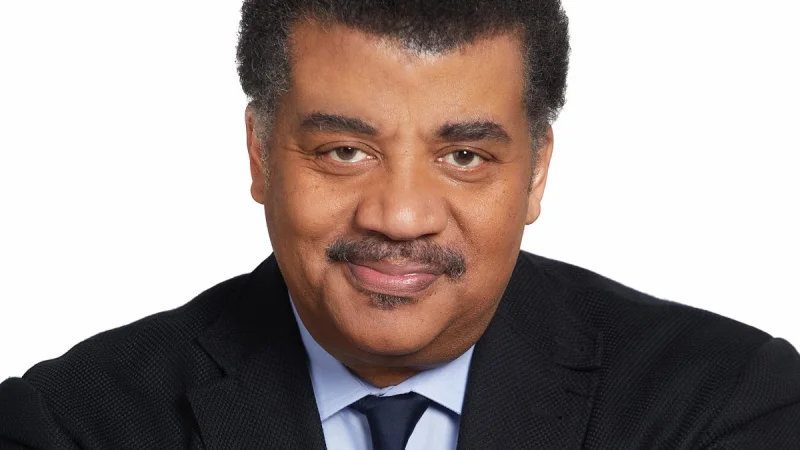
Neil deGrasse Tyson says he has spent much of his life looking up, but the first time he walked into the Hayden Planetarium at age 9, he was the one who felt starstruck. The astrophysicist said the visit left him changed, and that the feeling never really left.
"I was starstruck," Tyson said. "But maybe it was the universe that chose me rather than it being I who chose the universe, because I was never the same."
That lifelong fascination now sits at the center of his new book, "Take Me To Your Leader," which is out now from Simon Six. Tyson said the book includes tips for what to do if you meet an alien, critiques Hollywood's usual alien portrayals and serves as, in his words, a "celebration of people’s enthusiasm" for extraterrestrials. He said he wants people to "demand an alien" and not settle for talk that cannot be backed up.
The book arrives as Tyson continues to argue that alien talk should be tied to evidence, not wishful thinking. He said, "We need better evidence than your testimony to go from ‘I believe in aliens’ to ‘I know that aliens exist.’ And that transition requires somebody bringing forth an alien." He said he has seen a lot of unbridled speculation about aliens in the universe, and that he wanted to anchor the conversation in objective reality.
Tyson's own fascination began in the Bronx, where he grew up gazing into light pollution instead of a dark sky. He said he has dreamed of being abducted by aliens for as long as he can remember, especially when he is alone in a park with a clear view of the sky. That mix of wonder and skepticism runs through the book, which he said also tries to open the conversation beyond the familiar image of humanoids in costumes.
He said he wants aliens that look less human than other animals on Earth look to each other, pointing to humans and octopuses and humans and crabs as examples of how different life forms can still share a planet. Tyson said Andy Weir's work gets that balance right in "Project Hail Mary," where Rocky is a craboid alien made of rock with crab-like motions, does not live in an oxygen atmosphere, can withstand very high temperatures without melting and would be killed by certain gases that would not kill humans.
Tyson said he wants alien characters with powers that have some foundation in objective reality, and he also wants science fiction to stretch beyond familiar categories. "I want to see aliens with powers that have some foundation in objective reality," he said. "I want to see aliens that come in from other dimensions."
For Tyson, the point is not to shut down curiosity but to give it a firmer footing. He has long argued that the idea of extraterrestrial life should be discussed with the same rigor people would bring to any other claim about the physical universe, even if the subject has always fired the imagination. The new book pushes that idea into popular culture, where the usual alien stories, he says, often look more like mirrors of human beings than anything truly strange.
That is the tension at the heart of Tyson's message: he wants people to keep wondering, but he does not want wonder to become a substitute for proof. His book invites readers to imagine contact, but on his terms — with evidence first, spectacle second and aliens strange enough to make the rest of us seem ordinary.
