


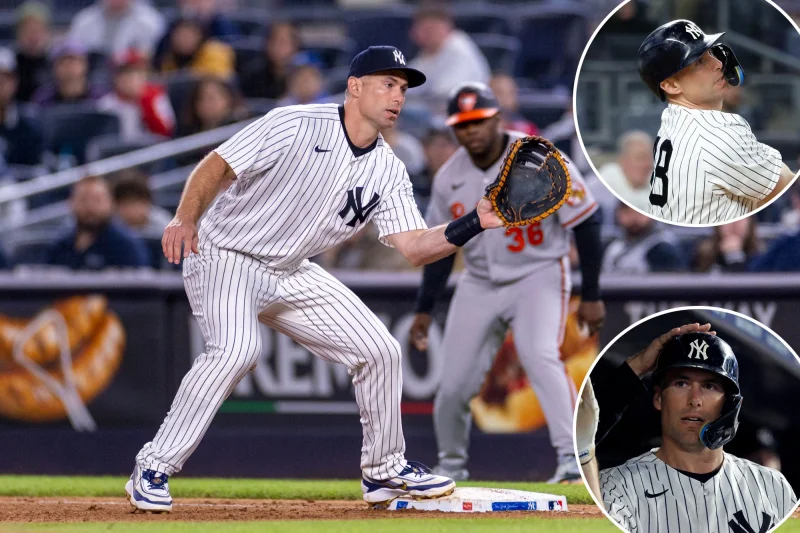
The New York Yankees wanted a cheap veteran first baseman who could complement Ben Rice, punish left-handed pitching and give Aaron Boone another quality bat to move around. Paul Goldschmidt has done exactly that, and more, through the first month and change of the season.
Through 20 games, Goldschmidt was hitting.262/.357/.557 with four homers and 10 RBIs. He also hit a leadoff homer on May 12 against Baltimore, a reminder that the Yankees are not just buying a platoon piece or a bench bat when they put him in the lineup.
That mattered because the deal was never supposed to be expensive or complicated. New York brought Goldschmidt back on a one-year, $4 million contract with incentives, expecting steady professional at-bats while injuries and roster shuffling tested the depth around the lineup. The idea was to pair him with Rice, use him against left-handers and keep Boone from having to force a matchup just because of the contract.
The numbers explain why that plan has held up so far. Goldschmidt slashed.336/.411/.570 against left-handed pitching in 2025, and per Baseball Savant he was carrying a.366 OBP,.618 slugging percentage and.984 OPS against left-handers in 2026. That kind of production gives the Yankees real flexibility, especially when they want another quality bat they can move around without turning every decision into a strict platoon call.
The tension is that Rice has also earned the right to play every day instead of being platooned. That leaves New York trying to balance two legitimate answers at first base and in the larger batting order, with Goldschmidt’s role shifting from matchup weapon and spot starter to something closer to an everyday option when the production supports it.
For now, the Yankees do not have to overthink it. Goldschmidt has been competitive enough overall that they can keep using him without forcing the issue, and that is exactly what a team wanted when it spent only $4 million to add an experienced bat that still looks capable of changing a game.
