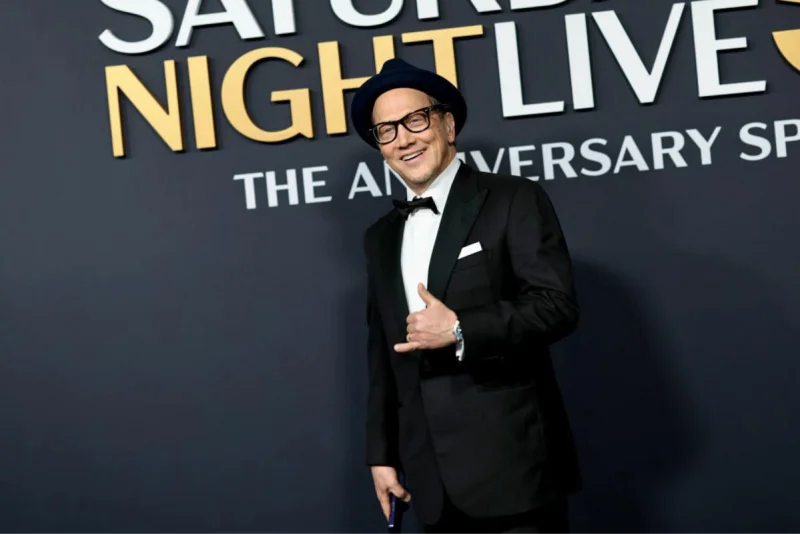
Rob Schneider used a recent episode of The Dr. Phil Podcast to argue that comedy is more than a way to get laughs. It is, he said, a pressure test for what people really believe — and a warning sign when a society stops letting people talk through disagreement.
Schneider made the remarks while discussing the death of Charlie Kirk and what he described as the need to keep open debate alive. He said labels such as “Nazi” and “White supremacist” are increasingly being thrown at people simply for disagreeing, adding: “Instead of saying you're wrong, I hate you, you're a demon, you're a Nazi, you're a fascist, because I'm old school.”
He said those words once had a much narrower meaning. “I come from a place where those words were used for fascists, Nazis, and White supremacists,” Schneider said. “They weren't used as a word for people who aren't agreeing with you.” He added that “when you stop the conversation, that's when violence starts,” tying the exchange directly to his concern that public argument is being replaced by condemnation.
Dr. Phil McGraw framed the same subject through the role comedy plays in public life. “Well, comedy isn't just punchlines. It's social math. In one sentence, a comic can expose what we're afraid to say, what we secretly believe, and where the culture’s tripwires are,” he said. McGraw also said many people hold back their real opinions because they fear social and professional punishment. “People will admit they don't feel free speaking their mind. They don't want to get fired. They don't want to get canceled. They don't want the consequences of speaking out what they really feel,” he said.
Schneider cast that freedom as part of the joke itself. “It's liberating. I mean, if people come to see comedy for any other reason, it's to feel liberated,” he said. “The idea is it's kind of like a cerebral magic trick,” he added, before saying, “If they don't laugh, sometimes it's too much.”
The exchange fits a broader argument now playing out across American public life: whether humor is simply entertainment or one of the few places where people still test uncomfortable ideas out loud. In that sense, the conversation between McGraw and Schneider was not just about comedy. It was about the shrinking room for disagreement, and the cost of treating every sharp opinion as an act of moral violence.
That is the friction at the center of Schneider's comments. He warned against demonizing opponents even as he discussed a climate in which offense itself can be treated as a weapon. His case is straightforward: if people are too afraid to speak, the debate does not become safer. It disappears.
What happens next is less a matter of one interview than of whether public figures keep pushing back against self-censorship in the open. Schneider's point was not that words do no harm. It was that when language is used to end conversation rather than answer it, the argument is already lost.