


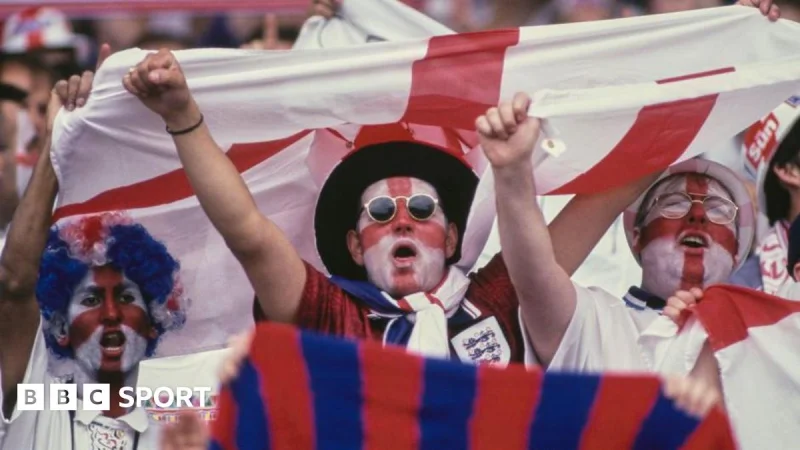
“Three Lions” turns 30 this year, and it is still doing the one thing its creators never quite expected: following England football far beyond the summer it was born from. Released on May 20, 1996, and unveiled at Euro 1996, the song has become both a lament and a rallying cry, a tune built on disappointment that somehow outlived the tournament that made it famous.
The track was engineered by David Baddiel, Frank Skinner and Ian Broudie of The Lightning Seeds, and it opened with a line that captured the mood of English supporters with uncommon precision: “everyone seems to know the score, they've seen it all before.” Its refrain, “Thirty years of hurt, never stopped me dreaming,” was written as a reference to the gap between England’s 1966 World Cup win and the 1996 European Championship. In 2026, that refrain feels heavier. The article says the nation is now enduring sixty years of hurt.
That widening span matters because “Three Lions” was never just another tournament song. It was a melancholic anthem, a rare piece of pop culture that turned England’s football frustration into something shared, singable and commercially durable. Three decades on, the song remains a massive financial engine for its creators and still dominates stadium terraces, proof that grief can be turned into a chorus and that chorus can keep earning long after the match is over.
Its reach has also gone far beyond England. The song is said to be instantly recognizable in sports bars from Nairobi to Mombasa, where fans have made it part of the sound of watching English football. That connection runs through the wider pull of the English game across Kenya, where supporters of the Harambee Stars have endured decades of World Cup qualification failures and know the ache of near-misses as well as any England fan.
That is the friction at the heart of “Three Lions”: it celebrates hope while resting on failure, and the longer England waits for the release that supporters keep imagining, the more the song’s original joke sounds like prophecy. In 2026, with sixty years of hurt now folded into the national story, “It’s Coming Home” still lands less like a statement of fact than a stubborn act of faith.
