


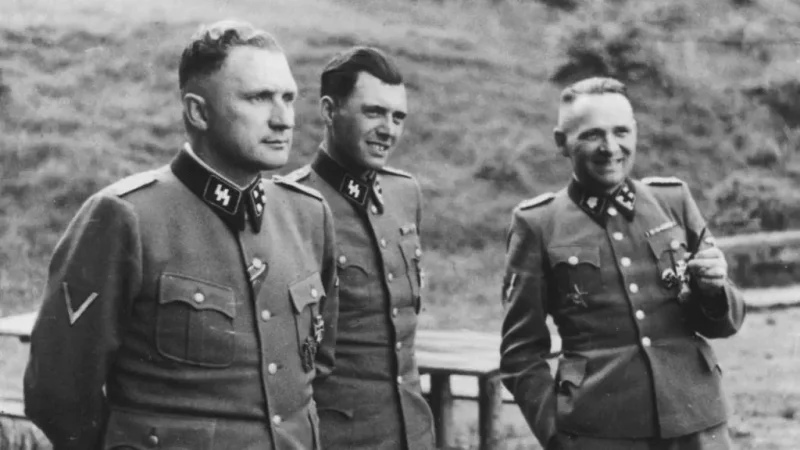
The Swiss Federal Intelligence Service says it will finally open long-sealed files on Josef Mengele, the Nazi doctor known as the Angel of Death, in a move that could shed new light on one of the darkest fugitive trails after World War Two. The agency did not say when the files would be released.
The decision lands decades after historians first asked to see the records and were turned away. It also revives questions that have lingered around Mengele's movements in Europe, including rumours that he spent time in Switzerland even though an international warrant had already been issued for his arrest in 1959.
Mengele was not an ordinary war criminal in the historical record. He served in Germany's Waffen SS and was posted to Auschwitz in Nazi-occupied Poland, where he selected prisoners to be sent to the gas chambers. At the camp, where an estimated 1.1 million people died, including about a million Jews, he also chose children and twins for sadistic medical experiments before sending many of them to their deaths.
After the war in 1945, Mengele fled Europe, quickly changed both his uniform and his name, and used a false identity to obtain Red Cross travel documents at the Swiss consulate in Genoa, in northern Italy. Those papers, intended for displaced or stateless people after the war but also obtained by Nazis, helped him make his way to South America.
The new Swiss disclosure has drawn fresh attention because the country has long sat at the edge of the Mengele story. Historian Regula Bochsler applied in 2019 to the Swiss Federal Archive to inspect the files, after years of requests from researchers went unanswered. Her interest was not abstract. She said there seemed to be evidence Mengele was planning a trip to Europe in 1959, and she asked a blunt question that still hangs over the case: Why did Mrs Mengele rent an apartment in Zurich?
That apartment, in a modest suburb close to Zurich's international airport, was rented by Mengele's wife and later put under surveillance by Zurich police in 1961. The police files note that Mrs Mengele was seen driving her Volkswagen with an unidentified man. Swiss authorities were also warned in June 1961 by Austrian intelligence that Mengele was travelling under an assumed name and might be on Swiss territory. Arresting him would have required Swiss federal police.
The same paper trail has kept historians circling back to a question that the sealed files may finally help answer: whether Mengele merely passed through Switzerland or found a more secure foothold there than has ever been publicly confirmed. A skiing holiday in the Swiss Alps with his son Rolf in 1956 was already known by the 1980s, but the wartime doctor's later movements remain a source of suspicion because the records have been locked away for so long.
For Switzerland, opening the files is more than an archival gesture. It places a notoriously secretive set of records back into the historical record and gives researchers another chance to connect the dots between Europe, Italy, Switzerland and the South American escape route that followed. For the families of Auschwitz victims, it is another reminder that the search for the full account of how one of the war's most notorious perpetrators moved through postwar Europe is still not finished.
