


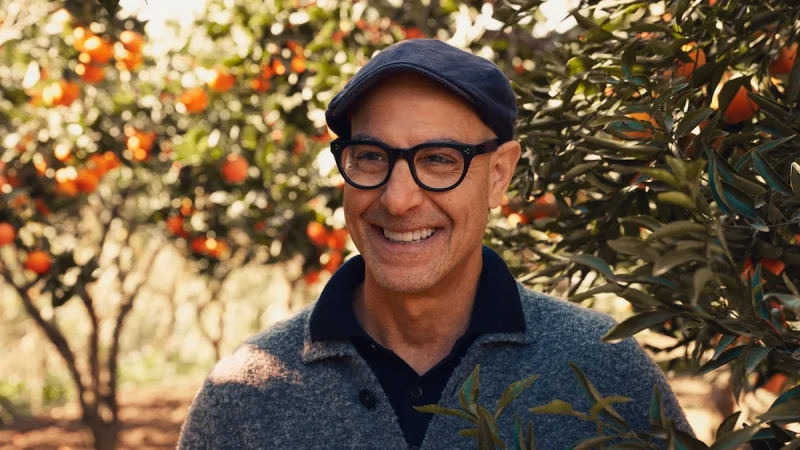
Stanley Tucci is heading back across Italy, and this time the journey runs from Naples and Campania to Veneto, Le Marche, Sicily and Sardinia. The second season of Tucci in Italy follows him through markets, kitchens and family recipes in search of the kind of food that says as much about a place as its language does.
The season arrives May 12, when it premieres on National Geographic and begins streaming on Disney+ and Hulu. Tucci has spent years writing about Italian food in his cookbooks and memoirs, but the new season puts him back in the field, tasting dishes and listening to the stories behind them rather than simply describing them on the page.
In Campania, Tucci tries spaghettino alle vongole fujute, a dish with a history as practical as it is frugal. It was made with stones from the sea to give the pasta a salty, seafood flavor when real shellfish was too expensive. In Sicily, he points to pasta alla norma as another example of the same idea, a dish he says uses seven ingredients. That plainness is part of what he calls the logic of the country’s cooking. “All of Italian cuisine is ‘poor cuisine.’ All of it,” Tucci says, adding that most Italian dishes rely on only five to 10 ingredients.

The show’s reach matters because it treats regional identity as something tasted as much as spoken. Tucci has already moved through famous and lesser-known Italian places on screen, including Florence, Rome, Maremma and Senarica, but the second season leans even harder into the differences between one area and the next. He describes Sardinia as a place that “always is astounding,” a region that can feel like another country and, in his words, like Italy maybe 50 years ago.
That sense of separateness runs through his visit to Sardinia and Sicily, islands he says have really only been united with the rest of Italy since 1861. Before that, he notes, different monarchies ruled different parts of them, including the Bourbons, the House of Savoy, the Greeks, the Normans and the Spanish. Sicilians, he says, still speak of themselves first and foremost as Sicilian, not Italian. In Sardinia, he adds, there is a place called Barbagia, a name that basically means barbarian, and even the mafia could not gain a foothold there because people are so fierce in defending their land and themselves.
The tension in Tucci’s travelogue is that the food looks simple even as the history behind it is anything but. In Tavolara, he sits down to fresh fish stew with the king of the island, who owns the only restaurant in the world’s smallest kingdom. It is the kind of scene that gives the series its pull: a celebrity host, but also a meal shaped by local memory, geography and the stubbornness of the people who keep those traditions alive. For Tucci, the story is not just that Italy has many cuisines. It is that the country’s kitchens still carry the marks of the borders, rulers and identities that formed them.
