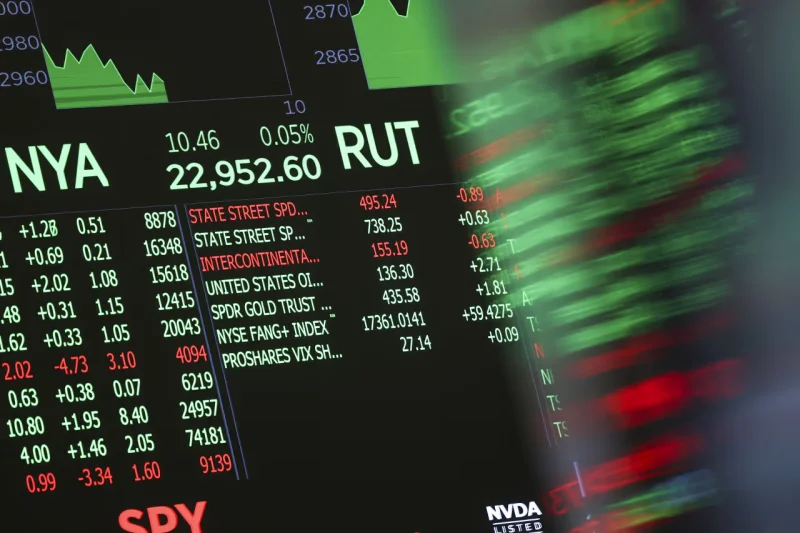
Stocks fell Friday as investors moved out of riskier assets, with rising oil prices, higher Treasury yields and renewed inflation concerns pressuring the U.S. market after a record-setting session a day earlier.
By late Friday morning ET, the S&P 500, Nasdaq-linked shares and Dow-tracking equities were all lower, with technology and semiconductor names leading the retreat. The decline followed a strong run for major indexes, but the latest move reflected a sharper reassessment of inflation risk, interest-rate expectations and stretched valuations in parts of the market.
Why Is The Stock Market Down Today?
The stock market was down today because investors faced a combination of higher energy prices, rising bond yields and concern that inflation may stay elevated for longer than expected.
Oil prices climbed again as geopolitical uncertainty continued to feed worries about supply disruptions. Higher crude prices can pressure consumers and businesses, while also complicating the inflation outlook for central banks. That matters for stocks because persistent inflation can reduce the chances of interest-rate cuts and may even revive discussion about tighter policy if price pressures accelerate.
Treasury yields also moved higher, making bonds more attractive relative to equities. When yields rise quickly, stock valuations often come under pressure, especially for fast-growing technology companies whose expected profits are weighted further into the future.
The selling was not limited to one corner of the market. Global equities also weakened, suggesting investors were reacting to a broader macroeconomic shift rather than a single company headline.
Futures Stock Market Weakness Carried Into Regular Trading
Futures stock market action pointed to a weaker open before the regular session began, and that pressure carried into Friday trading. Nasdaq and S&P 500 futures had already signaled a pullback as investors digested higher yields and renewed inflation anxiety.
The tone was a reversal from Thursday, when major U.S. indexes rallied and the S&P 500 and Nasdaq closed at record highs. The Dow also finished above 50,000 for the first time since February, supported by strength in technology and upbeat corporate results.
That strong prior session made Friday’s decline more striking but not unusual. After a sharp advance, markets can become more vulnerable to profit-taking when a fresh risk emerges. In this case, the trigger was not one data point alone, but a cluster of concerns around oil, inflation, rates and valuation.

Tech And Chip Stocks Lead The Decline
Technology shares were among the weakest areas of the market, with chip stocks drawing particular attention. Semiconductor companies had been major beneficiaries of investor enthusiasm around artificial intelligence, data centers and demand for advanced computing power.
That leadership has also left the group exposed to pullbacks when investors question whether valuations have moved too far too quickly. A wave of selling in chip names reflected caution after a period of intense gains, with some traders reassessing how much future AI-related growth is already priced into shares.
The Nasdaq’s underperformance showed how dependent the broader market has become on a relatively narrow group of high-growth companies. When megacap technology and semiconductor stocks fall together, the pressure can quickly spread across index funds and growth-oriented portfolios.
Bond Yields And Oil Prices Add To Inflation Fears
The move in Treasury yields was central to Friday’s stock market news. The 10-year U.S. Treasury yield rose toward its highest level in months, while shorter-term yields also climbed. That shift signaled investors were demanding more compensation for inflation and policy uncertainty.
Higher yields can weigh on stocks in several ways. They raise borrowing costs, reduce the appeal of risk assets and force investors to revisit the price they are willing to pay for future earnings. Growth stocks are particularly sensitive because their valuations often depend heavily on profits expected years ahead.
Oil added another layer of pressure. A sustained rise in energy prices can filter into transportation, manufacturing and household budgets. Even when core inflation measures exclude energy, higher fuel costs can shape consumer expectations and business pricing decisions.
That is why Friday’s market decline carried broader significance. It suggested investors were not simply reacting to daily volatility but reconsidering whether the inflation path remains as favorable as markets had hoped.
What Stocks Today Signal For Investors
Stocks today are sending a cautionary message rather than a clear recession warning. The selloff came after major indexes had recently reached or approached fresh highs, meaning some of the decline may reflect profit-taking and positioning rather than a breakdown in the economy.
Still, the pressure highlights how sensitive markets remain to inflation and interest-rate expectations. Investors had grown more comfortable with the idea that corporate earnings strength and AI investment could support higher stock prices. Friday’s trading showed that higher oil prices and rising yields can quickly challenge that confidence.
The next phase for markets will depend on whether energy prices stabilize, yields ease and economic data support the case for contained inflation. Corporate earnings, Federal Reserve commentary and incoming price reports will be closely watched for signs that the latest selloff is a temporary reset or the start of a more durable shift in risk appetite.