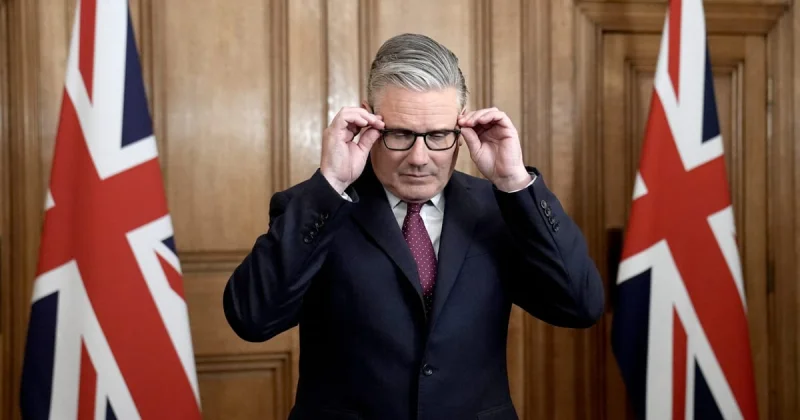
Keir Starmer intended to carry on in the top U.K. job on Wednesday even as a Labour backlash swelled around him, with more than 90 of his MPs now calling for his exit. News also leaked of a planned challenge to his leadership from Health Secretary Wes Streeting, landing moments before King Charles III sat down to deliver the government’s year-ahead legislative agenda in parliament.
The sequence mattered because it turned an already bruising week into a public test of authority. Starmer’s aides had already briefed the prime minister’s comments at Cabinet while the meeting was still going on Tuesday, a sign that the fight over his future had spilled into the machinery of government before the day was out. By Wednesday morning, the leadership crisis was no longer being whispered about in Westminster corridors; it was sitting beside the ceremonial start of the parliamentary year.
Starmer refused to see Streeting on Tuesday except for what one person familiar with the exchanges described as a brutally short meeting hours before the King’s Speech. Then, as Charles prepared to read the speech, news of Streeting’s intention to quit leaked into the open. One Streeting ally accused the leak of coming from allies of No. 10 in an effort to force Streeting’s hand at the worst possible time.
The timing was not accidental. No. 10 aides had arranged for the king’s speech to fall days after the May elections, giving the government a built-in moment to shift attention from internal politics to pageantry and policy. A Labour official called it a planned firebreak, where plotting would give way to ceremony, even if only briefly. Instead, the leak ensured the reverse: the day that was supposed to steady the government became the day that exposed just how unstable it had become.
Former Downing Street staffers said the episode fit an old pattern of leadership warfare: get the first version of events out, and the contest can turn before the other side has a chance to answer. Guto Harri said, “Getting that line out did change things,” and added, “Having a head start is about as good as it gets in a difficult race.” He also recalled a previous example from 2022, saying, “I rang Chris Mason [the ’s political editor] and told him [Johnson] had fired Gove because he was snake and treacherous.”
Beatrice Timpson described the same instinct in blunter terms, saying, “If the line is awful, it’s better just to have the awkwardness of not being contactable and resurfacing when you have a better line and a better answer.” The point of those tactics is simple: in a leadership crisis, silence can be read as weakness, and a rushed denial can make the damage worse. Starmer’s camp appeared to choose speed over certainty on Tuesday, but the leak around Streeting showed how hard it is to control a story once the numbers start moving.
That movement is now the story. More than 90 Labour MPs were calling for Starmer’s exit, a level of dissent that would have been hard to imagine when he took office and that makes the question no longer whether the pressure exists, but whether he can govern through it. The precedent from 2018, when Theresa May won her first confidence vote from Tory MPs before later resigning, and from 2022, when Boris Johnson sacked Michael Gove before his own fall, underlines how quickly a leader can go from embattled to finished once the party concludes the arithmetic has changed. Starmer is still in place, but Wednesday showed that in Westminster, a leader can survive the morning and still spend the day fighting for the right to stay.