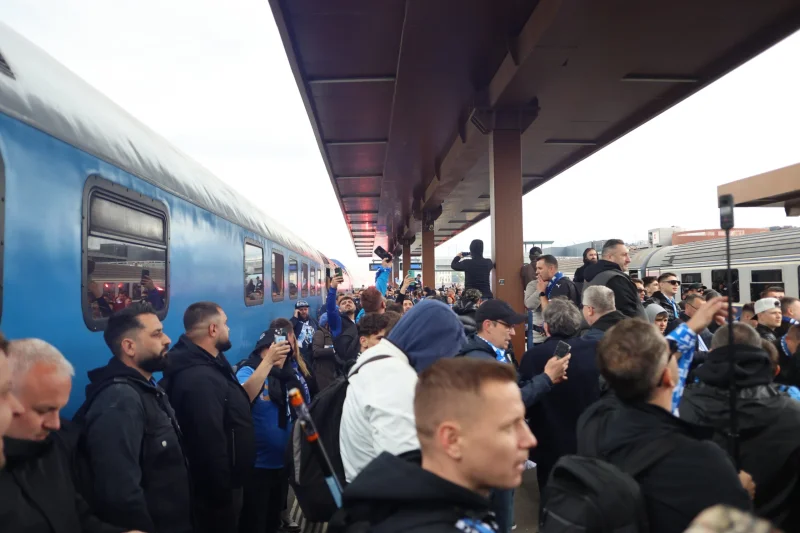
Virgil Popescu traveled by train with the Universitatea Craiova delegation to Sibiu on the day the club faced U Cluj in the Cupa României final, a trip that put one of the team’s investors on the same route as supporters before the 20:00 kickoff. Mihai Rotaru was also among the club’s fans on board, turning the journey into part of the buildup to an evening that could be followed in Live Text Online on
Popescu is not a casual presence around the club. He was co-opted into Universitatea Craiova’s shareholding by Rotaru and has long been described as a businessman with interests far beyond football. He founded Vectrum Solution, a company that provides construction and installation services, and has said it has worked with Penny, Lidl and Kaufland. He was also involved earlier with the handball team of CS Dacia Mioveni.
The trip to Sibiu fits a broader pattern in which club ownership, private investors and supporters often travel the same road on big-match days. For Craiova, the final was the kind of occasion that pulled together people with different roles in the club’s life: the owner, the investor and the fans, all headed to the same stadium for the same night.
Popescu’s name has also surfaced away from football. In 2024, he bought the abandoned Casa Donescu conac for 703,000 euros. The property had belonged to former Bucharest mayor Crin Halaicu, and Popescu has said he lives in Ștefănești, about 3 minutes on foot from the building. He said he wanted to save the conac and restore its original image after seeing it decay, describing it as being in a “stare jalnică” and saying earlier work had hurt its architectural charm.
He has also said the rehabilitation cannot begin until approvals from Culte are obtained because the building is classified as a historic monument and must go through special procedures. Asked about the project, Popescu said he does not know when the restoration will start or finish, only that the paperwork has to come first.
Football, though, has remained part of his story. Popescu said he is a good friend of Gică Craioveanu, that they knew each other from Slatina, and that he played until age 21, reaching Liga a III-a as a left back. He said he played again during military service at Armata Craiova between the ages of 20 and 21. That background helps explain why the train to Sibiu for the final was more than a ceremonial appearance: it was another stop in a life that has kept circling back to sport, business and the city around Universitatea Craiova.