


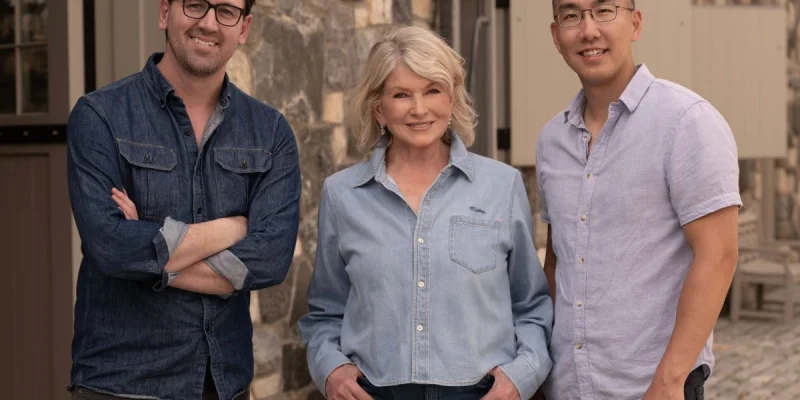
Martha Stewart is betting that homeowners will pay for software that watches their houses the way they watch their phones. The lifestyle entrepreneur has cofounded Hint, an AI home management startup that raised $10 million in seed funding and plans to launch on desktop and iOS this summer.
The company, which was incubated by Montauk Capital, was cofoundered by Stewart, home-services veteran Yih-Han Ma and chief technology officer Kyle Rush. Slow Ventures led the round, with participation from Montauk Capital, Tusk Venture Partners, Amplo, Energy Impact Partners, Hannah Grey and Brian Kelly.
Hint starts with a simple ask: users enter their address. From there, the app pulls public data on the property, weather, soil, air quality, listings and other signals, while also letting homeowners upload inspection reports, warranties, bills and insurance policies. Over time, it builds a running record of the home’s history and needs, and it can surface practical nudges, like reminding a homeowner to shop for insurance before a renewal date or warning a Texas homeowner to water a foundation before clay soil and a hot summer cause damage.

The pitch lands in a market that has already attracted plenty of money and attention. A 2025 Harvard housing study said Americans spend more than $500 billion a year on residential renovations and repairs, while Angi’s 2025 home spending survey found 62% of homeowners were more worried about affording maintenance than they were the year before. Hint is entering that field alongside names such as Angi, Thumbtack, Honey Homes and Birdwatch, which raised $9.25 million in 2024 and $3.2 million in seed funding the same year.
Stewart’s role goes beyond lending a famous name. She met Rush at Easter brunch on her farm, then tested Hint’s outputs in real-life situations on her own property. She also wrote guides that the product pulls from directly, underscoring the company’s idea that home care can be managed with software before it turns into a scramble for contractors.
That is the part of the business that will have to prove itself: whether AI can do more than organize the chaos and actually keep costs down for people who are already anxious about maintenance. As Ma put it, the first step is simply getting the address, after which the system starts learning enough to tell a homeowner when a problem does not even require a contractor.
