


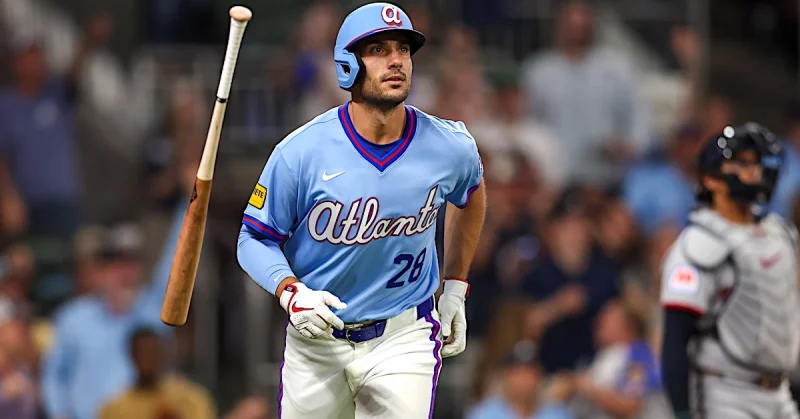
Six weeks into the 2026 season, Matt Olson's name is forcing a different kind of look at the Atlanta Braves schedule. The first baseman is still in the lineup every day, his consecutive games streak at 820, and he has just moved past Nellie Fox for the 11th-longest run in MLB history.
That is the number that matters first. Olson, 31, has not missed a game since May 2, 2021, when he returned to the lineup after hitting himself in the face with a baseball in the batting cage at Tropicana Field three days earlier. If he avoids any more batting practice mishaps, he should finish this season with the eighth-longest streak ever. Before the All-Star break next year, he is on track to become the 11th player in major league history to reach 1,000 straight games.
It is the kind of durability that should be celebrated on its own. Olson has already been hit by 30 pitches during the streak, and he keeps playing through the daily grind that usually wears down even the most durable regulars. In another corner of the sport, only seven players have ever gotten to 1,000 straight games. Olson is not there yet, but the pace is real, and it has become one of the quietest elite feats in baseball.
The broader Atlanta picture, though, is harder to separate from that steadiness. Since Olson joined the Braves in 2022, the club has won 100 regular-season games twice, but the postseason return has been thin: a 2-8 record and no playoff round victory since the 2021 World Series title. Atlanta also has not matched the ceiling it reached in 2023, when it won 104 games, carried nine starting position players who each played at least 100 games, and had eight of them reach at least 138. Olson was central to that surge, hitting a career-high 54 homers with a.283/.389/.604 line, 127 runs and 139 RBI.
The tension for the Braves is that the same reliability that makes Olson so valuable can also be read as a warning. He followed that 2023 peak with back-to-back 29-homer campaigns, while the team fell by 15 wins from 2023 to 2024 and then dropped another 13 in 2025. When one player almost never sits, the club gets his production every night. It also gets no relief from the wear that usually comes with the job, and Atlanta has been left with a lineup that stayed healthy enough to win in the regular season but has not found the October answer.
Olson's own postseason line explains some of that frustration. In 10 playoff games, he is hitting.250/.357/.417 with two homers. That is useful production, not the sort that swings a series by itself. The Braves have had seasons good enough to fill the schedule with meaning deep into September. They have not had a postseason run to match them. Olson's streak is now moving toward the sport's most exclusive club, but for Atlanta the bigger question is whether all that daily availability can be paired with a team that finally plays beyond the first round.
